Afghan Refugees in Pakistan Face Uncertain Future Amidst Deportation Threats


AP Photo
(Sanchita Bhattacharya)
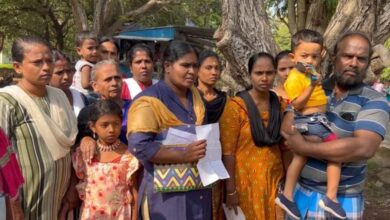
On December 27, local authorities in the Swabi District of Khyber Pakhtunkhwa (KP) Province in Pakistan issued official notices ordering Afghan refugees residing in the Barakai Afghan and Gandaf Afghan camps to evacuate immediately and return to Afghanistan. The decision is part of Pakistan’s broader policy to completely clear Afghan refugee camps by December 30, 2025. The notice stated that the process of fully dismantling the camps will begin on December 31, and refugees have been instructed to move their belongings, household items, and workspaces before that date.

The ongoing Afghan refugee repatriation from Pakistan is a three-phase plan. The official start of this drive was on September 26, 2023, when Pakistan’s Ministry of Interior issued the Illegal Foreigners’ Repatriation Plan (IFRP) targeting undocumented Afghans and, later, registered cardholders, initiating the policy to return Afghan nationals, including both undocumented migrants and holders of Afghan Citizen Cards (ACC) and UNHCR Proof of Registration (PoR) cards.
So far, IFRP has been divided into three phases by the Pakistani Government. In the first phase, which began in October 2023, unregistered or undocumented Afghan migrants were given a 30-day deadline to leave voluntarily or face deportation. This phase was accompanied by widespread arrests, harassment, and pressure on Afghan communities across Pakistan. On April 1, 2025, Pakistan officially launched the second phase, targeting Afghan nationals holding ACCs issued between 2017 and 2019.
According to UNHCR’s Operational Update, Pakistan November, 2025, the implementation of these two phases saw major returns of over 1.1 million Afghans from urban areas and refugee villages as of July 2025. The third phase, targeting holders of PoR commenced in September 2025 and has seen close to 166,000 PoR card holders returns. As of November 2025, over 1.82 million Afghans have returned to Afghanistan since the start of the IFRP. In November alone, 171,055 have returned to Afghanistan, with 37,899 deportations registered.
As relations between Kabul and Islamabad soured after the Taliban’s return to power, Pakistan – once the Taliban’s principal benefactor – accused Kabul of sheltering the Tehreek-e-Taliban Pakistan (TTP), the group behind a deadly spike in insurgent attacks in Pakistan’s border regions. As reported on October 1, 2025, TTP attacks, mostly targeting Pakistani Police, Army, and Paramilitaries, over the past four years, have left more than 2,500 dead. According to partial data collated by South Asia Terrorism Portal, in 242 incidents of killing involving TTP in 2025, 1,281 people were killed, including 83 civilians, 173 SF personnel and 1,025 militants (data till December 27). In 2024, 291 people died in 87 incidents, including nine civilians, 71 SF personnel, and 211 militants. In 2023, 158 people were killed in 66 incidents, including two civilians, 137 SF personnel, and 158 militants. 2022 registered 24 such incidents, in which 48 were killed, including three civilians, 17 SF personnel, and 28 militants. In 2021, in 33 incidents, 61 people died, including six civilians, eight SF personnel, and 47 militants. Since 2021, consequently, there has been a sharp increase of 2,000 per cent in TTP orchestrated killing inside
Pakistan.
On October 6, 2025, ACLED reported that TTP was engaged in 778 attacks in 2025 (till September 26) with North Waziristan, South Waziristan, Lakki Marwat, Dera Ismail Khan, Bajaur and Bannu in KP the worst affected districts, among others. 2024 recorded 617 such attacks; 2023 187 attacks; and 2022 158 attacks respectively.
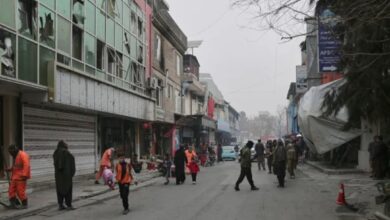
The harsh steps against Afghan refugees portray the entire migrant Afghan population as a potential threat to national security. But these refugees have long been tangled in a web of human rights violations and systemic neglect. Reports of forced evictions and arbitrary detentions have been alarmingly common. In a statement issued on January 7, 2025, Afghanistan’s Embassy in Pakistan said around 800 Afghans living in Islamabad had been detained by authorities. Refugee settlements, often makeshift and overcrowded, were subject to sudden demolitions, leaving thousands homeless and destitute. For instance, as reported on October 15, 2025, over 300 Afghan houses and shops were demolished during an operation near the Northern Bypass of Karachi. Similarly, on October 31, 2023, authorities in Islamabad had demolished mud houses belonging to Afghan refugees.
Discrimination against Afghan refugees is deeply entrenched in Pakistani society. Refugees encountered ethnic and racial hostilities. As reported on January 2, 2025, there was a spike in racial profiling in Islamabad and Rawalpindi District of Punjab. Police were given free license to pick up whoever they wanted, and to extort and exploit them. Earlier on November 24, 2024, Pakistan’s Interior Minister, Syed Mohsin Raza Naqvi, announced that Afghan nationals residing in Islamabad must obtain a No Objection Certificate (NOC) by December 31, 2024 or face expulsion from the city. “No Afghan national will be allowed to stay in Islamabad without an NOC after December 31,” Naqvi said. Consequently, as reported on January 8, 2025, over 800 Afghans were detained in Islamabad after
January 1, 2025.
Pakistan’s accelerated refugee evictions have immensely compounded the hardships of this unfortunate population, and underscore deepening strains in Pakistan-Afghanistan relations that risk aggravating regional instability. Without coordinated bilateral mechanisms and international support, forcible returns will fuel uncertainty, economic susceptibility, and further escalation of cross-border tensions.
Author Sanchita Bhattacharya is Senior Fellow at Institute for Conflict Management.
(The views expressed in the above piece are personal and of the author. They do not necessarily reflect Bharat Fact views.)