Canada’s Deadliest School Attack in Decades

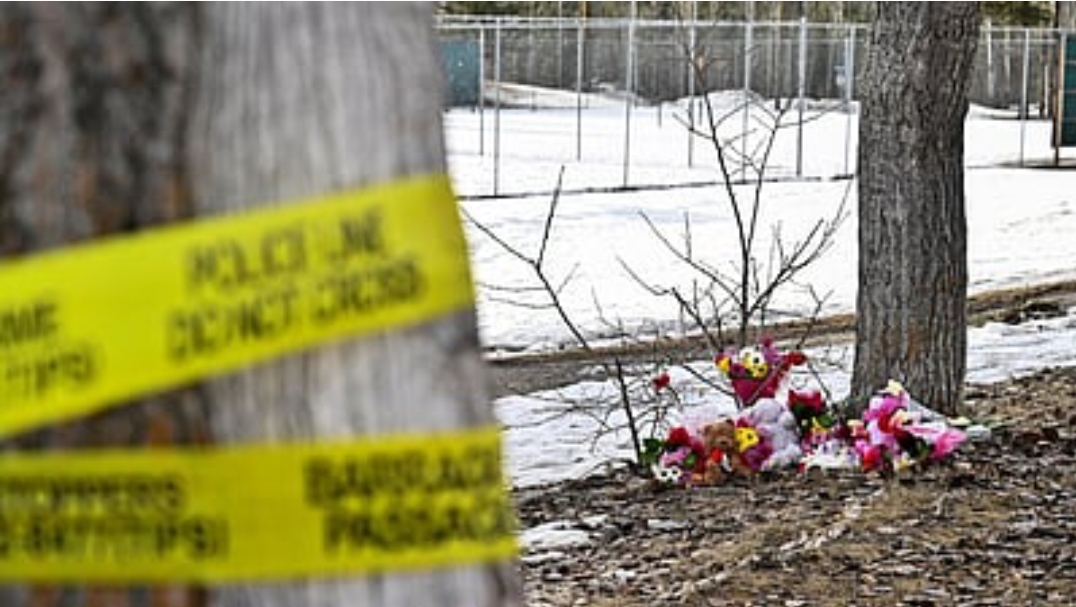
REUTERS/Jennifer Gauthier
(Nijeesh N)
On February 10, 2026, the otherwise quiet town of Tumbler Ridge, British Columbia, witnessed one of the deadliest mass shootings in recent Canadian history. An armed assailant opened fire at Tumbler Ridge Secondary School and a nearby residence, killing at least eight people and injuring 27, before dying from an apparent self-inflicted injury. The attack devastated the small community and reignited the national debate over gun violence and public safety in Canada, a nation with relatively strict firearm laws.


According to the Royal Canadian Mounted Police (RCMP), officers received reports of an active shooter at Tumbler Ridge Secondary School at approximately 1:20 p.m. (local time). Upon arrival, authorities confirmed that six victims were killed and 27 others injured inside the school, and that two additional victims were found dead at a nearby residence believed to be linked to the attack. The suspect was also discovered deceased at the school, having sustained an apparent self-inflicted gunshot wound.
The RCMP identified the suspect as a female but withheld her name to protect privacy and to support the ongoing investigation. Authorities indicated that the motive for the attack remains undetermined. Meanwhile, unconfirmed media reports suggested that the suspect was transgender and that the two individuals found deceased at the nearby residence were family members of the suspect, raising the possibility of a prior familial incident before the school shooting.
Although Canada has historically recorded far fewer mass shootings than its neighbour, the United States (US), such incidents are not without precedent, albeit rare relative to differences in population size and gun culture. On April 18–19, 2020, Canada experienced its deadliest mass killing in modern history when 51-year-old Gabriel Wortman killed 22 people during a 13-hour rampage across rural Nova Scotia. Disguised as a RCMP officer and operating a replica police vehicle, the perpetrator used firearms that had been illegally obtained – reportedly smuggled into Canada through contacts in the US – before he was ultimately shot and killed by the RCMP.
The Tumbler Ridge attack constitutes the second-deadliest school shooting in Canada’s history. The most infamous and deadliest remains the 1989 École Polytechnique massacre. On December 6, 1989, 25-year-old Marc Lépine entered a mechanical engineering classroom at École Polytechnique in Montreal, Quebec, armed with a legally obtained semi-automatic rifle, separated male and female students, and opened fire on the women, killing 14 and injuring another 14, before taking his own life. The attack was widely interpreted as an act of misogynistic violence directed against feminism, and catalysed an extensive national debate on violence against women, firearm regulation, and policing practices. It is commemorated annually on December 6 as the National Day of Remembrance and Action on Violence Against Women.
In the aftermath of the 2020 Nova Scotia killings, the Canadian government prohibited more than 1,500 models of assault-style firearms and strengthened firearm regulations, including enhanced background check requirements, with the stated objective of reducing the lethality of mass violence. According to the 2018 Small Arms Survey, Canada ranks among the countries with the highest per capita civilian gun ownership, with an estimated 12 million firearms in civilian possession – approximately 34 firearms per 100 people. By comparison, the US leads globally, with an estimated 393,347,000 firearms in civilian hands, equivalent to more than 120 firearms per 100 people.
In addition to firearm-related incidents, Canada has also witnessed other forms of mass violence in recent years. On April 26, 2025, eleven people were killed and dozens injured when a man, reportedly with a history of mental health issues, drove an SUV into a crowd attending a Filipino heritage festival in Vancouver. Earlier, on September 4, 2022, a coordinated stabbing spree across 13 locations in the communities of James Smith Cree Nation and Weldon in rural Saskatchewan province left 10 people dead and 18 injured. The suspect was subsequently arrested and later died in police custody from an acute cocaine overdose.
Canadian authorities acknowledge that such sporadic yet severe incidents continue to occur, frequently driven by individual motives, mental health challenges, or personal grievances, rather than organized extremist violence. Available data further indicates that mass casualty events often intersect with factors such as psychological distress, social isolation, grievance-based radicalization, and access to illicit weapons.
The Tumbler Ridge shooting has reignited the debate over firearm accessibility, community safety, and the adequacy of mental health interventions in Canada. Although mass attacks remain relatively rare in Canada, their social and psychological impact can be profound and enduring. The killings highlight that mass shootings are not solely an “American problem,” but a broader transnational challenge confronting Western societies.
Author Nijeesh N is Senior Fellow at Institute for Conflict Management.
(The views expressed in the above piece are personal and of the author. They do not necessarily reflect Bharat Fact views.)