Global Wave of Anti-Indian Hostility: A Growing Concern


Pic courtesy : X post from @BrianTamaki
(Ruchika Kakkar)
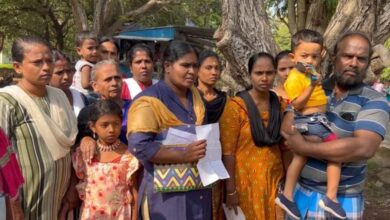
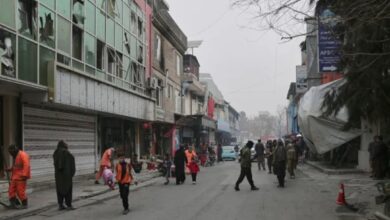
On December 20, 2025, a permitted Sikh Nagar Kirtan-a traditional religious procession-held in Manurewa, South Auckland, New Zealand, was briefly disrupted by around 50 protesters linked to Destiny Church leader Brian Tamaki. The protesters, chanting slogans such as “Kiwis First,” performing a traditional Maori haka, and invoking Christian phrases like “One True God” and “Jesus,” displayed a banner stating, “This is New Zealand, not India.” The group temporarily blocked the procession route before police intervened and separated the two sides, allowing the event to proceed. No violence,
arrests, or injuries were reported.

In subsequent social media posts on December 21-22, Tamaki characterised the protest as peaceful and framed it as a defence of national sovereignty. He alleged that participants in the Sikh procession displayed Khalistan flags and raised anti-India slogans, including calls for violence against Indian Prime Minister Narendra Modi. Labelling the Khalistan movement a “terrorist Sikh political movement,” Tamaki linked it to overseas instability and portrayed the procession as part of a broader “mass invasion” enabled by immigration. The Khalistan movement advocates an independent Sikh homeland in India.
Tamaki’s protest combined anti-immigration rhetoric with assertions of Christian supremacy.This incident followed a similar mobilisation earlier in the year. On June 21, 2025, Destiny Church led an anti immigration rally in Auckland during which protesters desecrated flags of non-Christian religions while advocating stricter immigration controls.
Hostility towards the Indian diaspora in 2025 has not been limited to New Zealand. Comparable incidents have been reported across several countries. On September 13, 2025, a far-right, antiimmigration march in the United Kingdom (UK) drew over 150,000 participants. Organised by far-right activist Tommy Robinson, demonstrators chanted slogans such as “They’ve taken our jobs” and “We want our country back.” The rally, centred on reclaiming the nation from migrants, raised concerns within the Indian diaspora – one of the UK’s largest migrant communities, with approximately 250,000 arrivals in 2023 alone.
On August 31 and October 19, 2025, anti-immigration rallies took place across Australia, including major cities like Sydney and Melbourne. These events were largely characterised as expressions of farright activism. One of the speakers, Thomas Sewell, a neo-Nazi, addressed the crowds from the steps of Parliament House.
Since 2023, the Indian diaspora in Australia, Canada, the UK, the United States, New Zealand, Ireland, and parts of Europe have faced rising hostility, including protests, vandalism, online hate campaigns, and isolated physical assaults. Key drivers include economic crises, unemployment, and nationalist rhetoric, which often portray migrants as threats regardless of their legal status, social integration, or contributions. Anti-Indian chants and slogans increasingly frame the community as a danger to national cohesion, a narrative frequently amplified by neo-Nazi and other extremist groups.
In the US, online hostility, especially on X, surged during 2024-2025 amid debates over the H-1B visa programme, with repeated calls to restrict or abolish it. Indians account for over 70 per cent of H-1B recipients, and criticism was often framed as protecting American jobs. Isolated incidents of temple vandalism and anti-Hindu graffiti were also reported. Even the third generation in USA faces such xenophobic sentiments.
Ireland has witnessed a troubling rise in physical assaults against Indians since 2023. Although major organised rallies have been absent, violence escalated in mid-2025. In just a month, there were six attacks on Indian-origin immigrants in Dublin, Clondalkin, Ballymun and Waterford. In Tallaght, Dublin, an Indian man was beaten and partially stripped by a group of youths, with footage circulated online.
An Indian man – reportedly a young professional – was attacked by a group of teenagers near his apartment in Clondalkin; he suffered fractures and bruising in the assault. In Ballymun, a taxi driver was assaulted by passengers shouting racial slurs, including “go back to your country.” In Waterford, a six year-old Indian-origin girl was attacked and racially abused. Notably, anti-Indian hostility must also be situated within the broader landscape of anti-South Asian racism, particularly in the U.S.
Although such hostility targets a wide range of Indian and South Asian communities, it frequently makes no distinction between Indians and other South Asians, or between Hindus, Muslims, Sikhs, and other religious groups, nor between citizens and non-citizens. History demonstrates how fragile belonging can be. In 2022, racist violence took place in South Africa.
Arson and looting were justified by claiming that foreigners were stealing jobs from locals. From Indians in Uganda to Chinese-Indonesians and Caribbean Britons, political shifts have repeatedly transformed settled communities into perceived outsiders. In the Gulf Cooperation Council (GCC) states – including Saudi Arabia, the United Arab Emirates (UAE), and Qatar – Indian migrants constitute a significant share of the labour force. Despite close bilateral ties with India, these workers often endure exploitative conditions and limited legal protections.
These developments stem from a combination of factors: populist scapegoating during times of
economic uncertainty, far-right mobilisation across Europe, and widespread concerns over
multiculturalism and national identity. However, the politicisation of a diaspora, especially when paired with growing cultural assertiveness, can affect their host country in both positive and negative ways.
While engagement can enhance economic ties and soft power, politically or culturally aggressive activism may deepen social divisions, support extremist or separatist movements, and create diplomatic friction with host nations. Diaspora communities often bring in home-country issues, funding, lobbying, and shaping narratives in their countries of adoption. When this politicisation intersects with religious and cultural assertiveness, it creates tensions both within transnational networks and in host societies.
The Indian diaspora, historically admired for its economic success and integration, has seen its imageshift, as fringe groups increasingly promote nationalist or religious agendas reflecting India’s internal polarisations. In a context of rising global xenophobia and identity politics, this has led to greater scrutiny and, at times, resentment, recasting diaspora from a model minority to a politically charged actor.
Author Ruchika Kakkar is Senior Fellow at Institute for Conflict Management.
(The views expressed in the above piece are personal and of the author. They do not necessarily reflect Bharat Fact views.)