Maoists Lose Ground in Odisha, No Room for Regrouping

(Deepak Kumar Nayak)
On December 25, 2025, Communist Party of India-Maoist (CPI-Maoist) ‘commander’ and ‘Central Committee Member (CCM)’ Ganesh Uike aka Rupa aka Rajesh Tiwari aka Chamu aka Pakka Hanumantu (69), who carried an INR 11 million bounty on his head, was among four Maoists killed in an encounter with Security Forces (SFs) in a forest area under Chakapada Police Station limits in the Kandhamal District of Odisha. Additional Director General (ADG), Anti-Naxal Operations, Sanjeeb Panda, divulged that the Kandhamal encounter was launched in a forest area under Chakapada Police limits near the Rambha Range of Ganjam District, based on credible intelligence inputs from the Odisha Special Intelligence Wing (SIW). Superintendent of Police (SP), Kandhamal, Harish B.C. disclosed that security personnel recovered the bodies of four Maoists – two men and two women – in uniform, along with two INSAS (Indian Small Arms System) assault rifles and one .303 rifle. Ganesh apart, the other three slain Naxals were identified as Rajni, Seema and Umesh, all CPI-Maoist party members, carrying an INR 165,000 reward each. Ganesh was the Odisha in-charge of the outlawed organisation and had taken the mantle of the banned outfit’s operations in the state in October, following the killing of the previous state in-charge Modem Balakrishna (63) in Chhattisgarh’s Gariabandh District on September 11 this year.
On December 24, 2025, two CPI-Maoist cadres from Chhattisgarh carrying a combined bounty of nearly INR 2.4 million were killed in an exchange of fire with SFs in the Gumma Forest area under Belghar Police Station limits in the Kandhamal District. The slain cadres were identified as ‘Area Committee Member (ACM)’ Bari aka Rakesh of Rayagada Area Committee of the Bansadhara-Ghumusar-Nagavali (BGN) Division, hailing from Sukma District in Chhattisgarh, and Party Member Amrit of the Supply Dalam (armed squad) of the BGN Division, from Bijapur District in Chhattisgarh. Recoveries from the encounter site include one revolver, one .303 rifle, and one walkie-talkie set, along with other materials.

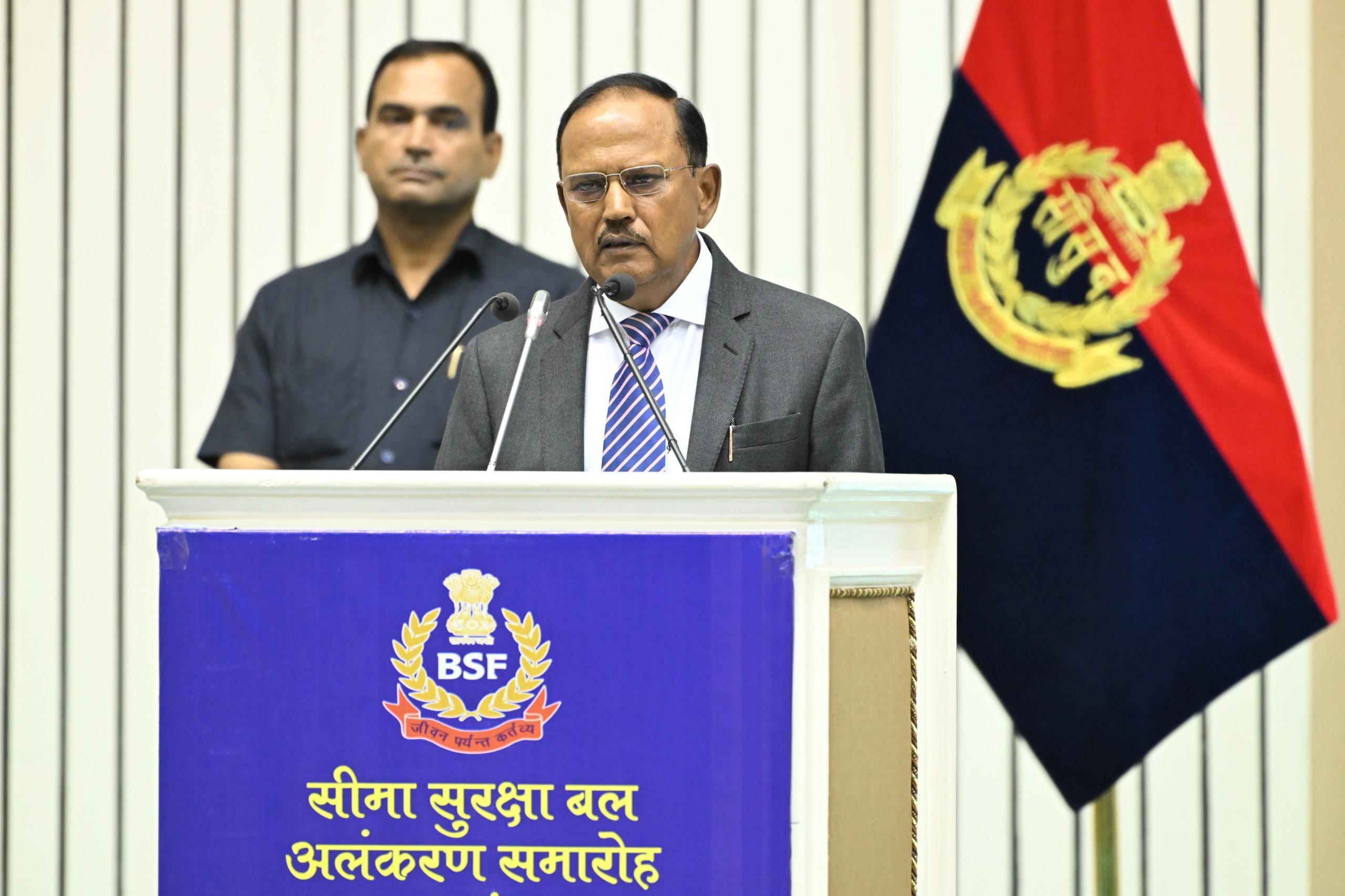
Following the successful security incursions, Union Home Minister (UHM) Amit Shah tweeted, on
December 25, 2025,A significant milestone towards Naxal-free Bharat. In a major operation in Kandhamal, Odisha, 6 Naxalites, including Central Committee Member Ganesh Uike, have been neutralized so far. With this major breakthrough, Odisha stands at the threshold of becoming completely free from Naxalism. We are resolved to eliminate Naxalism before the 31st of March 2026.
The twin encounters in Kandhamal took place under the ‘Kandhamal-Kalahandi-Boudh-Nayagarh
(KKBN) Division’. The KKBN and BGN together comprise six Districts – Boudh, Gajapati, Kalahandi, Kandhamal, Koraput, and Rayagada.
According to partial data compiled by the South Asia Terrorism Portal (SATP), at least six Naxalites have been eliminated in the KKBN and BGN divisions of Odisha in the current year, so far (data till December 28, 2025). During the corresponding period of 2024, eight Naxalites were eliminated, and no further fatalities were recorded in the remaining two days of 2024. Three Naxalites had been eliminated in 2023. Significantly, at least 133 Naxalites have been eliminated since March 6, 2000, when SATP began documenting data on Left Wing Extremism (LWE) in the state and across the country. Notably, eight Naxalites have been eliminated since January 21, 2024, when UHM Amit Shah proclaimed that the country would be freed of the menace of Naxalism by March 31, 2026.
The twin encounters on December 24 and 25, 2025, in Kandhamal District mark one of the most decisive blows dealt to the CPI-Maoist in the State in recent years. The elimination of ‘Central Committee Member (CCM)’ Ganesh Uike, along with five other armed cadres, underscores the cumulative success of sustained, intelligence-driven counter-insurgency operations by the Odisha Police, particularly its Special Operations Group (SOG), in coordination with the Central Reserve Police
Force (CRPF) and the Border Security Force (BSF). These operations come at a critical juncture, with the State and the Union Government jointly working towards the declared objective of eliminating LWE by March 31, 2026.
Odisha, once considered part of the eastern Maoist arc, has witnessed a steady contraction of insurgent influence over the past decade. Earlier, SAIR had noted that ongoing operations between 2015 and early 2025 that resulted in hundreds of insurgent neutralisations, arrests, and surrenders, underscoring the continued weakening of Maoist structures in Odisha through systematic action. Notably, on March 10, 2025, Odisha Chief Minister Mohan Charan Majhi informed the State Assembly that SFs had eliminated 118 CPI-Maoist cadres in the state over the past decade.
The state witnessed the steady contraction of insurgent influence especially, after the two successive encounters in the Bejingi Forest area between Ramgarh and Panasput in the Malkangiri District on October 24 and 27, 2016, in which SFs killed at least 30 rebels. The KKBN division and the BGN division were among the last surviving operational zones where the Maoists attempted to retain relevance through sporadic movement, propaganda, and limited armed presence. The December encounters, however, demonstrate that the residual Maoist apparatus in these divisions has been critically degraded, leaving little space for regrouping or revival.
The killing of Ganesh Uike represents a classic case of leadership decapitation with far-reaching operational and psychological consequences for the Maoist movement in Odisha. Uike was not merely a field ‘commander’ but the CPI-Maoist state in-charge, entrusted with strategic oversight of multiple divisions, inter-state coordination, logistics, recruitment, and political indoctrination. A veteran of over four decades in the movement, he was among the few surviving CCMs still active in eastern India. His neutralisation strikes at the very core of Maoist command and control in the state. Unlike lower or midlevel ‘commanders’, a CCM’s role is not easily replaceable, particularly in an environment where the organisation is under relentless pressure from SFs and facing acute manpower shortages. The elimination of Uike follows earlier losses of senior leaders in the KKBN region, including State and divisional-level functionaries neutralised or arrested over the past few years. Taken together, these losses have hollowed out the leadership pipeline, leaving the organisation with limited tactical direction and diminishing ideological coherence.
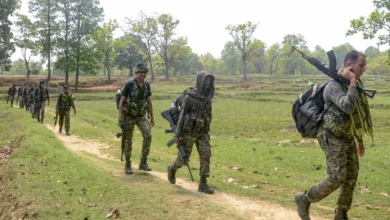
Operationally, the December 24-25 encounters also underline the maturity of Odisha’s counterinsurgency grid. Acting on precise intelligence – much of it reportedly generated from recent surrenders, in southern Odisha – SFs deployed multiple teams, sealed escape routes, and engaged Maoists in successive firefights without suffering casualties. The recovery of INSAS assault rifles, .303 weapons, revolvers, and communication equipment further weakens the already depleted firepower of the Maoist formations in the KKBN and BGN divisions. Equally significant is the fact that these encounters occurred.
in terrain once considered highly favourable to insurgents. Kandhamal’s forested tracts historically provided cover, mobility, and logistical depth to Maoist units operating across district and state boundaries. The SFs’ control over this terrain reflects sustained area domination, improved intelligence penetration, and effective inter-agency coordination. It also signals that Maoist safe havens in Odisha have largely ceased to exist. From a broader perspective, the Maoist movement in Odisha is now characterised by isolation, attrition, and demoralisation.
A November 21, 2025, media report suggests that only around 80 to 85 hardcore Maoists remain active in the State, most of them outsiders with limited local support. This is in stark contrast to the situation a decade ago, when Odisha witnessed frequent Maoist violence, organised divisions, and active recruitment among tribal youth. The sharp rise in surrenders-numbering in the thousands since 2015 – has further eroded the insurgents’ social base and intelligence networks.
According to the SATP database, seven Maoists have been arrested by SFs, and six have surrendered in LWE-related incidents across both the divisions in the current year, so far (all data till December 28, 2025). Since March 6, 2000, 661 have been arrested by SFs, and 1,374 have surrendered across the
divisions.
The December encounters also illustrate the symbiotic relationship between security operations and surrender-cum-rehabilitation policies. The surrender of 22 Maoists in Malkangiri just days before the operation not only deprived the movement of manpower but also generated actionable intelligence that proved crucial in tracking senior leadership. This virtuous cycle, pressure leading to surrenders, and surrenders leading to better intelligence, has been a defining feature of Odisha’s anti-LWE strategy in recent years.
The immediate implication of the Kandhamal encounters is the near-total collapse of Maoist
organisational capacity in the KKBN and BGN divisions. With the loss of a CCM and other experienced cadres, these divisions are unlikely to mount coordinated operations or revive armed activity in any meaningful way.The psychological impact on remaining cadres is likely to be severe, reinforcing perceptions of inevitability and futility.
At the strategic level, Odisha appears firmly on course to meet the March 31, 2026, deadline for the elimination of Naxalism. Violence indicators have declined sharply, recruitment has dried up, and the Maoists’ ability to influence local populations has been steadily undermined by development outreach and governance measures. The State’s experience reinforces the assessment that LWE in India is no longer an expanding insurgency but a residual security challenge confined to shrinking pockets.
There are also inter-state implications. Uike played a key role in maintaining linkages between Odishabased cadres and Maoist units in Chhattisgarh, Telangana, and Andhra Pradesh. His death disrupts these linkages, complicating efforts by Maoists to use Odisha as a transit or recuperation zone. This, in turn, increases pressure on Maoist remnants in neighbouring states, as escape routes and fallback areas become increasingly constrained.
The December 24-25, 2025, encounters in Kandhamal have effectively foreclosed the possibility of Maoist reorganisation in the State and stand as a compelling example of how sustained political resolve, intelligence-driven security operations, and robust surrender policies can together dismantle a protracted insurgency. As the March 31, 2026 deadline approaches, the security situation in Odisha suggests that Naxalism here is no longer a strategic threat, but a receding legacy.
Author Deepak Kumar Nayak is Senior Fellow at Institute for Conflict Management.
(The views expressed in the above piece are personal and of the author. They do not necessarily reflect Bharat Fact views.)