Thailand-Cambodia Border: Renewed Violence

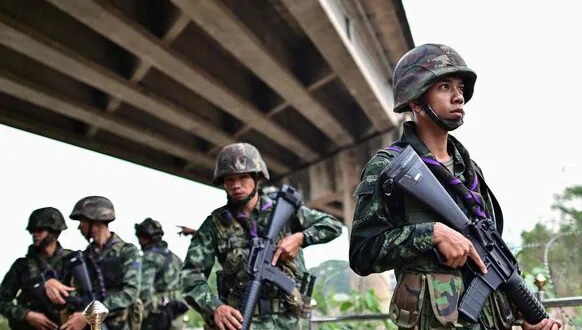
Pic source: AFP
(Ajit Kumar Singh)
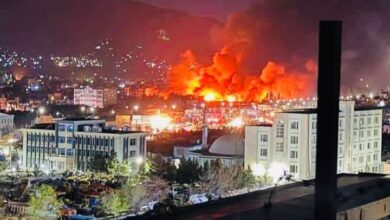
The surge of violence along the Thailand-Cambodia border in December 2025 has dismantled the fragile October truce, reigniting armed clashes, civilian deaths, and mass evacuations. Centred on the Prasat Ta Krabey Temple in Cambodia’s Oddar Meanchey Province, the three-day hostilities between December 7 and 9 killed nine Cambodian civilians and three Thai soldiers, injuring another 49. Tens of thousands fled as artillery barrages and limited airstrikes pummelled contested areas. Cambodia decried Thailand’s assault as “unprovoked aggression,” while Bangkok insisted its counterfire responded to Cambodian rockets that felled Thai troops. Diplomatic pleas from France and Australia fell on deaf ears; Thailand’s foreign minister bluntly stated there was “no space for diplomacy,” exposing
the chasm in bilateral ties. This flare-up not only highlights tactical instability but also the utter failure of earlier stabilization efforts.

The October 2025 ceasefire, brokered in Putrajaya by the United States (US), Malaysia, and China, demanded an immediate halt to fighting, withdrawal of heavy weapons, and restoration of communication lines. US President Donald Trump intervened personally, phoning both leaders and linking economic aid to adherence. Post-signing, Trump boasted of delivering “peace to the border,” touting it as a diplomatic triumph. Cambodia even nominated him for the Nobel Peace Prize. Yet, the accord’s hollowness was evident: autumn saw persistent skirmishes, and by November, Thailand halted key provisions, hastening the truce’s demise. December’s clashes proved the deal lacked robust verification – such as neutral observers or joint probes – leaving it vulnerable to nationalist fervour.
This breakdown echoes the July 2025 crisis, the worst since 2011, which claimed at least 48 lives and displaced over 300,000 across provinces. Over five days (July 24-28), Thai artillery and airstrikes hammered Cambodian positions near sacred temples, according to Phnom Penh. Thailand retorted that Cambodian incursions, rocket attacks, and ambushes – killing soldiers and razing villages – sparked the response. The barrage of heavy weapons signalled a doctrinal shift toward escalation, prompting urgent diplomacy that yielded a hasty July ceasefire and the ill-fated October reinforcement. Both pacts crumbled swiftly, underscoring profound mistrust and tepid political resolve. Signs loomed earlier in 2025. A May gunfire exchange killed a Cambodian soldier; a July landmine blast maimed Thai troops. These sparked border reinforcements and elevated alerts. Thailand’s internal politics bred caution, while Cambodia fretted over frontier-based crime syndicates and cyber-scam
hubs. As hotlines faltered, field officers wielded unchecked authority under permissive engagement rules, priming minor sparks for major blazes.
At root, the strife traces to colonial borders etched by French rule over Cambodia, spanning 800 kilometres of ambiguity. Temples like Preah Vihear (awarded to Cambodia by the International Court of Justice in 1962), Ta Muen Thom, and Prasat Ta Krabey straddle vague lines, with mutual claims of creeping fortifications. Nationalism amplifies this: Thai and Cambodian elites invoke sovereignty and honour, making concessions electoral poison.December’s diplomatic implosion was swift. Ambassadors were yanked, crossings sealed, and channels severed amid finger-pointing over who fired first. Both sides invoked United Nations Charter self-defense rights. Experts decry heavy arms in civilian zones as a casualty multiplier, irrespective of
origins. Absent joint teams or monitoring, the ceasefire hinged on fleeting goodwill – now evaporated under patriotic surges. Trump’s peace proclamation rings hollow, contrasting pageantry with the grind of true resolution.
The fallout ripples regionally and globally. ASEAN’s impotence in quelling member-state strife dents its legitimacy, complicating South China Sea tensions. Bilaterally, entrenched militarization can be expected, dooming demilitarization or cooperative ventures like eco-tourism. Geopolitics intrudes: USThai defense pacts clash with China’s Cambodian sway, recasting a territorial spat as great-power theater. Without persistent pressure – UN monitors, reactivated hotlines, binding demarcation talks – the frontier courts perpetual peril. Each bout inflicts humanitarian scars, erodes economies, and risks wider contagion. The 2025 saga warns that superficial accords breed deeper wounds.
Author Ajit Kumar Singh is Senior Fellow at Institute for Conflict Management.
(The views expressed in the above piece are personal and of the author. They do not necessarily reflect Bharat Fact views.)