The US Role and the IS Administration in Syria

AFP Photo
(Afsara Shaheen)
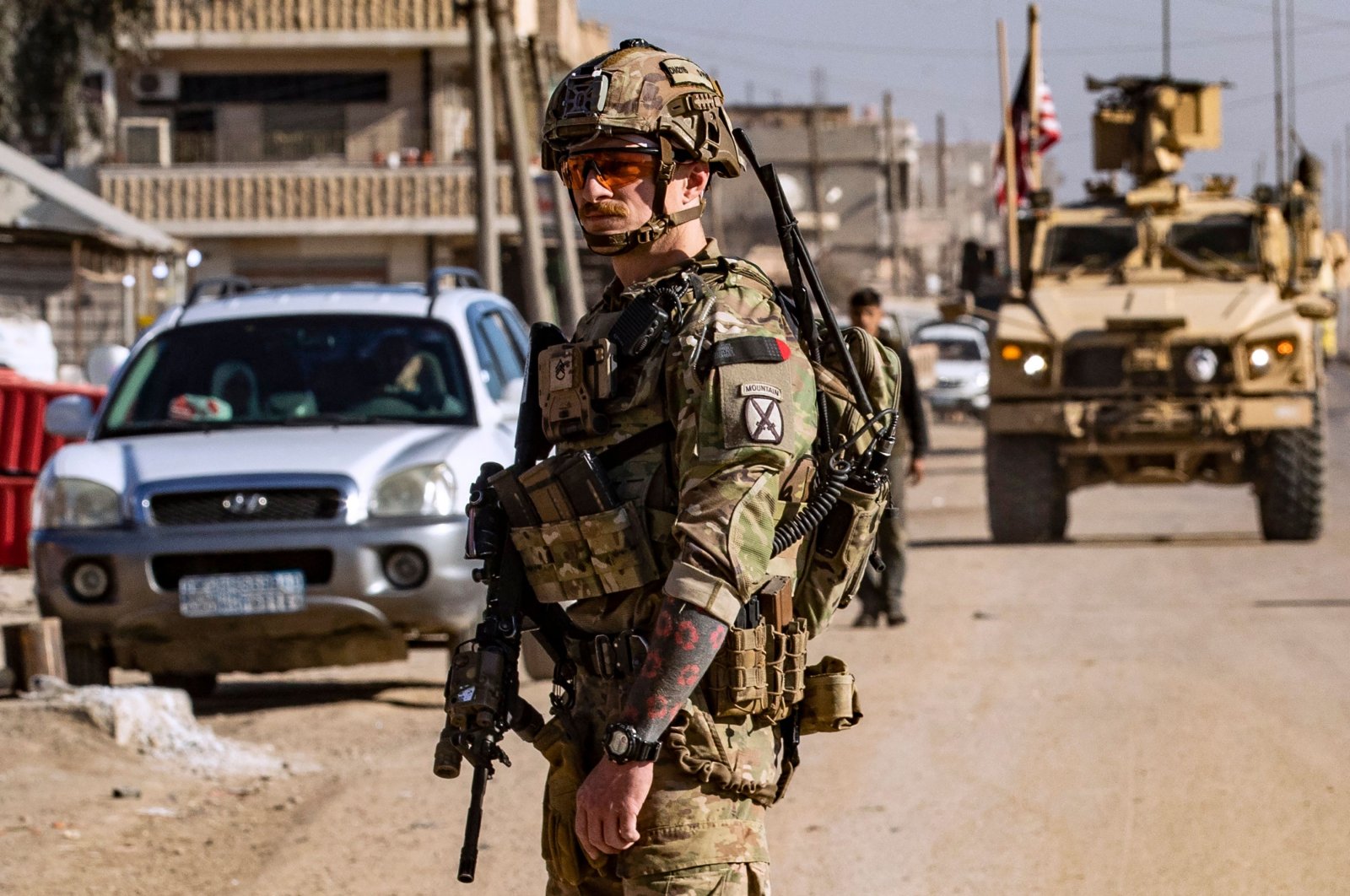
Three Americans – two service members and a civilian interpreter – were killed on December 13 in Syria in an ambush attack by an Islamic State (IS) group member, according to the US Central Command (CENTCOM), underlining questions regarding the role of the US in Syria. The continued US presence in Syria is one of the most contested dimensions of the Middle Eastern order since the Arab Spring, particularly in debates surrounding state collapse, proxy governance, and the unintended empowerment of extremist actors.


The interim administration led by the one-time IS terrorist Ahmed al-Sharaa, has completed roughly one year in office amid profound institutional fragility and territorial fragmentation. The regime exercises uneven authority, relying heavily on allied armed factions, rather than consolidated state institutions, resulting in persistent security vacuums. Relations between the al-Sharaa administration and the United States remain adversarial and indirect, with Washington neither recognising the regime nor engaging it diplomatically. Nevertheless, the US maintains an estimated 900 troops in Syria, deployed primarily in the north-east alongside the Syrian Democratic Forces (SDF) and at the al-Tanf base near the Iraqi-Jordanian border. These forces operate without Damascus’ consent and are sustained through logistical corridors from Iraq, aerial resupply, and fortified forward operating bases. The stated objectives of this presence are to prevent the resurgence of IS, secure detention infrastructure holding IS affiliates, retain leverage over Syria’s political future, and limit the influence of rival regional actors. However, continued IS attacks on US forces raise questions about the effectiveness of this containment strategy and the capacity – or willingness – of the al-Sharaa regime to dismantle residual IS networks.
Allegations that the United States directly “installed” or supported an Islamic State (IS) administration cannot be substantiated by formal policy or documentary evidence; however, U.S. strategic choices, indirect interventions, and selective engagement have doubtless contributed to conditions that enabled IS to emerge, govern territory temporarily, and challenge and eventually supplant the preceding Syrian regime.
Despite his public disavowal of the IS ideology and public commitments to create a government for “all Syrians”, the al-Sharaa administration has been marred by major human rights violations. In March this year, approximately 1,400 Alawites were massacred, including hundreds killed by forces aligned with Syria’s interim government. In July, Druze communities in southern Syria were targeted in violent attacks, reinforcing concerns regarding sectarian governance, the erosion of minority protections, and the regime’s limited control over allied armed actors. These incidents underscore the persistence of insecurity despite the formal termination of IS as a territorial entity in Syria.
From the US perspective, continued military deployment in Syria serves a set of clearly defined strategic objectives extending beyond counterterrorism. Control over north-eastern Syria allows Washington to deny Damascus access to key hydrocarbon resources in Hasakah and Deir ez-Zor, thereby constraining post-war reconstruction and limiting the regime’s fiscal autonomy. The partnership with the SDF functions as a long-term proxy arrangement, enabling territorial influence at relatively low political cost. The al-Tanf base, positioned at the tri-junction of Syria, Iraq, and Jordan, plays a critical role in monitoring and disrupting transnational movement along the Baghdad-Damascus axis. In effect, the US presence institutionalises a zone of strategic denial, preserving leverage over Syria’s political trajectory while preventing full territorial consolidation by the al-Sharaa administration.
Further, Israeli interests in Syria are more narrowly security-centric but deeply interwoven with the US military posture. Israel’s sustained air and missile strikes target Iranian military infrastructure, weapons depots, and allied militias, aiming to prevent the entrenchment of hostile forces near the Golan Heights, and to disrupt weapons transfers to Hezbollah. The persistence of fragmented authority in Syria directly serves Israeli strategic preferences, as it reduces the likelihood of a unified, militarily capable Syrian state aligned with Iran. US control of al-Tanf complements Israeli objectives by constraining Iranian logistical corridors and providing strategic depth to Israel’s campaign of pre-emptive deterrence. In this configuration, instability is not merely tolerated but functionally embedded within a broader regional security architecture that privileges Israeli freedom of action over Syrian sovereignty or long-term stabilisation.
Syria’s present order reflects managed instability rather than recovery. The al-Sharaa administration lacks effective territorial control, while US and Israeli strategies emphasise containment and strategic denial over political resolution. This approach suppresses immediate threats but perpetuates sovereignty deficits, governance vacuums, and conditions conducive to the persistence of extremist violence.
Author Afsara Shaheen is Senior Fellow at Institute for Conflict Management.
(The views expressed in the above piece are personal and of the author. They do not necessarily reflect Bharat Fact views.)