Turkiye: The Shadow of the Islamic State


Pic Source: AP
(Shivangi Sharma)
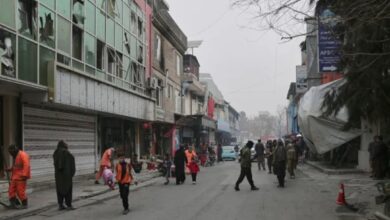
On December 25, 2025, Turkish security forces launched a large-scale counter-terrorism operation across Istanbul, acting on intelligence about imminent attacks linked to Christmas and New Year celebrations. The Istanbul Chief Public Prosecutor’s Office stated that Police were tipped off that the extremist group had called for action particularly against non-Muslims, during the celebrations. The Office issued 137 arrest warrants, and simultaneous raids were conducted at 124 locations. As a result, 115 suspected Islamic State (IS)/ Islamic State of Iraq and Syria/the Levant (ISIS) suspects were detained. Police seized firearms, ammunition, and organisational documents, indicating operational planning rather than mere ideological affiliation. Additionally, the suspects were in contact with IS operatives outside Türkiye.

The announcement of mass arrests comes two days after Turkish intelligence agents carried out a raid against the group on the Afghanistan-Pakistan border, over a Turkish national who was alleged to have held a senior role with the IS wing operating in the region, and who was detained, accused of planning attacks against civilians. Türkiye’s geographical location near the IS’ hotspot fuels its ideology in the country, as it shares a 900 kilometre (560-mile) border with Syria, where the group continues to operate in parts of the country.
Syria’s President Ahmed al-Sharaa has also vowed to work with the US and Europe to root out surviving elements of IS, making it helpful for Turkish agencies. In addition, the US launched a wave of air strikes against the IS across Syria on December 19, 2025, in response to the killing of three Americans.
Simultaneously, Syrian security forces also launched operations against IS including two raids on the outskirts of Damascus, the Syrian capital, in which Taha al-Zoubi, identified as the IS leader in the Damascus area, was captured, and Mohammed Shahadeh, a senior IS
commander in Syria, was killed. These operations highlight that the cross-border dimensions of IS terrorism.
These incidents demonstrate a continuum of IS-linked violence in Türkiye and the evolving nature of its operations. On October 10, 2015, twin suicide bombings at the Ankara Central railway station during a peace rally claimed 95 civilian lives and 245 others were injured, marking the deadliest terrorist attack in modern Turkish history and signalling IS’s intent to deliver high-impact strikes at public gatherings. This was followed by further deadly attacks during 2015-2016, including the January 12, 2016 Sultanahmet suicide bombing in Istanbul that killed 10 people, at least eight of them German tourists, and injured another 15; and the June 28, 2016 Atatürk Airport attack which killed 48 and injured 238.
On January 1, 2017, a gunman linked to IS shot and killed 39 people and wounded 70 at the Reina nightclub in Istanbul during New Year celebrations, reinforcing the group’s preference for targeting symbolic festive occasions. More recently, on January 28, 2024, an attack on the Santa Maria Italian Catholic Church in Istanbul resulted in one worshipper’s death, illustrating ongoing threats to religious minorities.
The scale of the Istanbul operation is particularly notable. Detaining over 100 suspects in a single City operation suggests the presence of broad support and logistics networks, rather than isolated sympathisers. IS continues to exploit holidays, symbolic locations, and both civilian and security targets
in Türkiye. The pre-emptive action by Turkish authorities reflects a shift toward intelligence-driven neutralisation, rather than post-incident response. Türkiye’s December 2025 arrests, moreover, underscore the reality that, although the IS lost territorial control in Iraq and Syria by 2019, cells and affiliates continue to operate globally, executing or planning attacks through clandestine networks. IS remains a transnational threat capable of inspiring or directing violence across borders. Coordination among nations, including security operations on borders, intelligence sharing, and proactive policing, remains essential to detecting and dismantling these networks.
Author Shivangi Sharma is Senior Fellow at Institute for Conflict Management.
(The views expressed in the above piece are personal and of the author. They do not necessarily reflect Bharat Fact views.)