Afghanistan’s Northern Frontier: A Hotspot for Extremism and Narcotics Trafficking

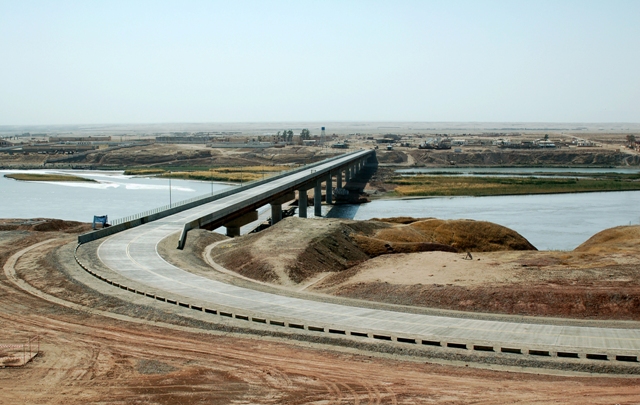
Pic Source: Wikipedia
(Afsara Shaheen)
On December 23, 2025, at least five security personnel, including three Afghan nationals and two Tajikistan Border Guards, were killed in a cross-border armed clash along the Tajikistan-Afghanistan border, highlighting persistent instability along Afghanistan’s northern frontiers. Tajikistan’s State Committee for National Security confirmed that two of its border guards were killed after armed assailants opened fire from Afghan territory.

The exchange of fire erupted when attackers launched an assault from Afghanistan’s Badakhshan province, specifically from the Shahr-e-Buzurg District, and from Chah Ab District in the neighbouring Takhar province. Tajik border forces retaliated, killing at least three attackers during the confrontation. Later on December 26, 2025, Tajikistan asked the Taliban to issue a formal apology and step up security along the shared border following the incident.
This incident followed a series of deadly cross-border attacks in December and November 2025, marking a sharp escalation in violence along the Tajikistan-Afghanistan frontier.
On December 2, 2025, five Chinese citizens were killed in cross-border attacks launched from Afghan territory into Tajikistan’s Khatlon Province, with sources alleging the involvement of Taliban forces and affiliated mining operatives. According to sources in Afghanistan’s Badakhshan Province, clashes erupted after a smuggler crossed into Tajikistan via the Nusay route, triggering an exchange of fire between Tajik border guards and Taliban fighters, during which two Chinese nationals were killed and five injured. Subsequently, another three Chinese citizens were killed in a separate attack involving gunfire and a grenade-equipped drone allegedly launched by Taliban-linked elements from Afghan territory. Tajikistan’s Presidency confirmed that two attacks from Afghanistan killed five persons and wounded five, prompting President Emomali Rahmon to order a review of border security. Tajikistan’s Ministry of Foreign Affairs (MFA) condemned the attacks, urging the Taliban to prevent further crossborder violence. The Taliban acknowledged the incident but issued a vague statement, denying responsibility, while Pakistan and China strongly condemned the killings.
While the identity and affiliations of the attackers have not been officially confirmed, the incident underscores the growing volatility along the Tajikistan-Afghanistan border since the Taliban’s return to power in August 2021. Tajik authorities have repeatedly expressed concern over the presence of armed groups, including militant outfits and criminal networks, operating from northern Afghan provinces adjacent to the Central Asian states of Turkmenistan, Tajikistan and Uzbekistan.
On November 26, 2025, the Tajik Ministry of Foreign Affairs (MFA) disclosed that three Chinese citizens had been killed after a drone, allegedly launched from Afghan territory, struck a workers’ camp in southern Tajikistan’s Khatlon Region. The unmanned aerial vehicle (UAV), reportedly equipped with grenades and firearms, hit the LLC Shohin SM camp near the 1st Border Guard Post Istiqlol in the Yol Border Detachment. The victims were Chinese employees of the private company stationed at the site.
Tajik authorities attributed the attack to “criminal groups” operating from inside Afghanistan and strongly condemned the incident. Dushanbe urged the Afghan authorities to take effective measures to ensure stability and security along the Afghanistan-Tajikistan border and prevent further cross-border attacks.
The incident heightened concerns over militant activity and the use of drones for cross-border terrorism in Central Asia. These attacks reflect a broader deterioration of security along the Tajikistan-Afghanistan border since
the Taliban’s return to power in August 2021. The border stretches over 1,300 kilometres, much of it running through remote, mountainous terrain that is difficult to monitor and control. Afghan provinces such as Badakhshan, Takhar, and Kunduz have long functioned as transit routes for militants, drug traffickers, and smugglers. Since 2021, security dynamics in these regions have shifted significantly, with armed groups, criminal networks, and extremist organisations exploiting weak governance and porous borders.
Throughout 2025, Tajikistan has faced sustained pressure along its southern frontier, particularly from narcotics traffickers operating from northern Afghanistan. On August 4, 2025, Zafar Samad, head of Tajikistan’s Drug Control Agency, stated that at least 10 armed confrontations with narco-traffickers had occurred along the Afghan border near Badakhshan Province during the first half of the year alone during which four Afghan nationals were killed. Samad confirmed that Afghanistan remains the primary source of narcotics smuggled through Tajikistan and reported that 3,107 kilograms of narcotics had been seized in 2025, more than one tonne of which was intercepted near the Afghan border. The scale of seizures highlights both the persistence of trafficking networks and the violent challenge they pose for Tajik security forces. Methamphetamine shipments originating from Afghanistan have also emerged as a major driver of violence along the frontier.
The repeated clashes illustrate the increasingly blurred lines between militant activity and organised crime. Tajik border forces have frequently confronted armed elements attempting to cross from Afghanistan. On February 25, 2023, Tajik Border Forces shot dead three Afghan drug traffickers, including two Taliban members, as they attempted to enter Tajikistan via Bostan village in Takhar Province. Another two traffickers drowned while trying to flee across the Amu River. Such incidents demonstrate how narcotics trafficking, militant networks, and armed violence are deeply intertwined along the border.
One of the principal drivers of insecurity along the Tajikistan-Afghanistan frontier is the continued presence of militant groups in northern Afghanistan. These include the Islamic State-Khorasan Province (ISKP), remnants of Al Qaeda-linked networks, and Central Asian jihadist groups such as Jamaat Ansarullah, also known as the Tajik Taliban. Jamaat Ansarullah, composed largely of Tajik nationals, has reportedly maintained a presence in Badakhshan and other northern provinces. Despite Taliban assurances that Afghan soil will not be used against neighbouring states, reports indicate that the group continues to operate with varying degrees of freedom. Tajikistan considers Jamaat Ansarullah a direct national security threat, given its stated objective of overthrowing the Tajik government.
ISKP has also expanded its footprint in northern Afghanistan, carrying out attacks against Taliban targets and ethnic and religious minorities. Although ISKP’s primary focus has been internal destabilisation, its transnational ambitions raise concerns about potential spillover into Central Asia. Regional security officials have repeatedly warned that northern Afghanistan provides a permissive environment for extremist groups seeking to exploit cross-border vulnerabilities.
Diplomatic engagement between Tajikistan and the Taliban has followed a contradictory trajectory. Despite years of vocal opposition to Taliban rule, 2025 witnessed unprecedented high-level contacts. In November 2025, Tajik delegations travelled to Kabul to meet senior Taliban leaders, including Acting Foreign Minister Amir Khan Muttaqi and Acting Prime Minister Mohammad Hassan Akhund, to discuss border management, intelligence sharing, and security coordination. Taliban delegations also visited Tajikistan to discuss similar issues. Both sides publicly claimed progress and the development of “mutual trust,” yet the recurrence of deadly cross-border incidents suggests that these engagements have not translated into effective control on the ground.
Taliban officials have also raised sensitive demands during these interactions, including diplomatic recognition and control of Afghanistan’s embassy in Dushanbe – issues Tajikistan has consistently resisted since August 2021. The gap between diplomatic dialogue and operational security realities remains stark, reinforcing scepticism within Tajikistan’s security establishment.
Tajikistan has adopted one of the hardest lines against the Taliban among Afghanistan’s neighbours. Dushanbe has refused to formally recognise the Taliban regime and has openly criticised its exclusionary governance model. President Emomali Rahmon has repeatedly warned that extremist groups operating from Afghan territory pose a serious threat to Central Asia, particularly those with ethnic or ideological links to the region.
These security concerns have been accompanied by increasingly hardline domestic measures. In late May 2025, the Taliban’s Ministry of Refugees and Repatriation reported that Tajikistan deported 49 Afghan migrants over two days, many of whom held residence cards or valid travel documents. Earlier, on April 21, 2025, more than 40 Afghan migrants were forcibly deported from the city of Vahdat, including individuals registered with the United Nations High Commissioner for Refugees. Several were reportedly detained at workplaces, markets, or medical facilities. These actions reflect Dushanbe’s growing securitisation of migration, amid fears of militant infiltration and criminal activity.
Regional security organisations have echoed Tajikistan’s concerns. On February 8, 2025, Imangali Tasmagambetov, Secretary General of the Collective Security Treaty Organization (CSTO), identified Afghanistan as a major source of terrorist and drug trafficking threats to Central Asia. He highlighted the CSTO’s decision to strengthen the Tajikistan-Afghanistan border through an intergovernmental programme aimed at preventing the spread of terrorism, extremism, and narcotics. Earlier, in 2023, CSTO assessments estimated that approximately 6,500 Islamic State of Iraq and Syria (ISIS) militants were operating in Afghanistan, with around 4,000 ISKP fighters believed to be stationed near the Tajikistan border, primarily in Badakhshan, Kunduz, and Takhar Provinces.
Afghan opposition figures have reinforced these warnings. On January 4, 2025, Ali Maisam Nazary, head of foreign relations for the National Resistance Front of Afghanistan (NRF), claimed that Jamaat Ansarullah seeks to destabilise Tajikistan while maintaining links with the Taliban and Al Qaeda. He argued that terrorism in Afghanistan cannot be addressed in isolation and warned that the country remains a regional hub of extremism under Taliban rule.
Against this backdrop, the repeated cross-border attacks of late 2025 appear less as isolated security lapses and more as manifestations of a deteriorating structural environment along Afghanistan’s northern frontier. The convergence of militant groups, narcotics trafficking networks, and emerging technologies such as weaponised drones has created an increasingly complex threat landscape. The targeting of Chinese nationals is particularly alarming, given China’s extensive investments in Central Asia and its cautious engagement with the Taliban. Such attacks risk drawing Beijing into a more assertive security posture, while complicating Taliban efforts to secure economic legitimacy and international recognition.
For Tajikistan, the cumulative impact has been profound. The country faces a volatile mix of militant infiltration, drug trafficking, refugee pressures, and diplomatic strain. While Dushanbe has pursued selective engagement with the Taliban on border coordination, the events of December 2025 have reinforced perceptions that engagement has failed to deliver tangible security outcomes. Unless the Taliban take credible, verifiable steps to dismantle militant and criminal networks operating from northern Afghanistan, the Tajikistan-Afghanistan border is likely to remain a persistent flashpoint, with serious consequences for Central Asian stability and broader regional security
Author Afsara Shaheen is Senior Fellow at Institute for Conflict Management.
(The views expressed in the above piece are personal and of the author. They do not necessarily reflect Bharat Fact views.)