India: Maoist Arms Caches: The Unfinished War

PTI File Pic
(Deepak Kumar Nayak)
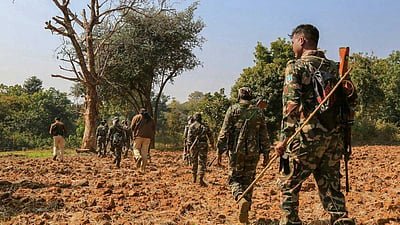
On July 20, 2026, Security Forces (SFs) unearthed a Communist Party of India-Maoist (CPI-Maoist) hideout and a large cache of ammunition and explosive materials during a joint search operation in the forested and hilly area between Alparas and Gumchur Villages under Koylibeda Police Station limits, along the Kanker–Narayanpur border in Kanker District, Chhattisgarh. The recoveries included 42 INSAS (Indian Small Arms System) rounds, 48 .303 rifle cartridges, 23 Self-Loading Rifle (SLR) rounds, 34 rounds of 8 mm ammunition, eight blank rounds, eight Barrel Grenade Launcher (BGL) cells, 10 detonators, 10 metres of cordex wire, four metres of combat cloth, two steel boxes (10-kilogram and 5-kilogram capacity), medicines and other Maoist materials. The explosives recovered during the operation were safely neutralised on the spot by the Bomb Detection and Disposal Squad (BDDS). Officials stated that sustained joint operations in the border region would continue to dismantle CPI-Maoist infrastructure.
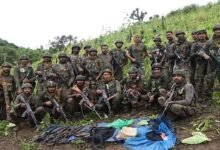
On July 19, 2026, the Jharkhand Police recovered a cache of arms and ammunition from a CPI-Maoist dump in the Chandwa Police Station area of Latehar District, Jharkhand, on the basis of information provided by arrested CPI-Maoist ‘Regional Committee Member (RCM)’ Ravindra Ganjhu. The recoveries included one AK-56 rifle, two magazines and 90 rounds of ammunition concealed beneath a tree in a forested area. Latehar Sub-Divisional Police Officer (SDPO) Sandeep Kumar stated that Ganjhu, who was arrested from Helsa Village in the Chandwa area on July 13, 2026, had disclosed the location of the hidden cache during interrogation. Another AK-56 rifle had been recovered from his possession at the time of his arrest. Carrying a cumulative reward of INR 1.8 million, Ganjhu was wanted in 154 cases and was allegedly involved in the November 22, 2019, ambush in Chandwa that killed four SF personnel, as well as the January 7, 2013, Katia ambush in Barwadih that left 12 SF personnel dead and 14 injured.
On July 17, 2026, the BDDS recovered and safely defused two Improvised Explosive Devices (IEDs), including a three-kilogram pressure cooker IED, suspected to have been planted by CPI-Maoist cadres, during separate search operations at Marrapi Village and Marrapi Hill in Kanker District, Chhattisgarh. Kanker Superintendent of Police (SP) Nikhil Rakhecha disclosed that around 40 IEDs had been recovered and neutralised in the area since it was declared ‘Maoist-free’.
Elsewhere, on the same day, SFs, comprising the Narayanpur Police and the 58th Battalion of the Border Security Force (BSF), uncovered a CPI-Maoist arms and ammunition cache during a joint search operation in the Kachchapal Forest under Kohkameta Police Station limits in Narayanpur District, Chhattisgarh. The recovered cache included one .303 rifle, one .315 rifle, one locally made barrel launcher, 17 live .303 cartridges, 10 live 7.62 mm cartridges, four 12-bore cartridges, one empty .303 magazine, two cartridge fillers and three .303 tracer rods. According to officials, the weapons and ammunition had been concealed by CPI-Maoist cadres for future use. All recovered materials were seized and handed over for forensic examination. A case was registered at the Kohkameta Police Station, and investigations are underway. Officials stated that sustained joint operations by the Police and BSF have resulted in repeated recoveries of Maoist arms and explosives, disrupting the outfit’s logistical network and strengthening security in previously affected areas.
On July 16, 2026, SFs recovered a CPI-Maoist arms and IED dump during a joint search operation in the Karegutta Hills, north of Pamunuru Village, under Wazedu Police Station limits in Mulugu District, Telangana. Security personnel recovered two Bharmar rifles, 25 electric detonators, gelatin sticks, cordex wire, electric wire, a 12-volt battery and other Maoist materials. The explosives were subsequently rendered safe by the BDDS at the site. Officials stated that the recovered cache had been concealed for use in future Maoist operations against SFs in the area. No exchange of fire was reported during the operation, and all personnel involved returned safely after successfully completing the mission.
Despite the Union Government’s March 31, 2026, deadline for the elimination of Left Wing Extremism (LWE), Security Forces (SFs) continue to recover substantial quantities of Maoist arms, ammunition and explosives from concealed caches across the country’s remaining and previously insurgency-affected areas.
The persistence of these recoveries well beyond the Government’s deadline indicates that, although the Maoist organisational structure has been severely degraded, the insurgency’s material infrastructure has not yet been completely dismantled. According to partial data collated by the South Asia Terrorism Portal (SATP), at least 45 Maoist-linked incidents involving the recovery of arms and ammunition have been recorded across the country since the March 31, 2026, deadline (data till July 26, 2026). Between January 1 and March 31, 2026, 75 such incidents were recorded. Thus, at least 120 incidents of arms and ammunition recoveries have been reported nationwide during 2026, up to July 26. Of the 120 incidents, Chhattisgarh accounted for the highest number of recoveries (63), followed by Odisha (20), Jharkhand (19), Maharashtra (eight), Telangana (seven) and Bihar (three).
The figures suggest that while the Maoist organisational structure has suffered severe attrition, a substantial quantity of arms and ammunition remains concealed in caches, forest dumps, abandoned camps and underground hideouts. Further, in many instances, the surrender of individual cadres has not resulted in the complete dismantling of local militia units, overground worker (OGW) networks or village-level support structures. Arms and ammunition are believed to have been buried in waterproof containers, concealed in caves, hidden beneath forest floors, or stored in remote hill tracts for future retrieval and use. The continued recovery of such caches suggests that residual Maoist and splinter networks retain knowledge of these concealed stockpiles, preserving a latent capacity for future mobilisation.
This concern is reinforced by the continued operational activity of Maoist splinter groups. On May 9, 2026, for instance, two cadres of the People’s Liberation Front of India (PLFI), a CPI-Maoist splinter outfit, were arrested in Jharkhand’s Khunti District, while allegedly planning organisational expansion and levy collection activities. Police recovered two country-made pistols and two rounds of ammunition from their possession. Although the incident did not involve the recovery of a concealed arms cache, it underscored the ability of residual extremist networks to retain weapons, sustain recruitment efforts and exploit surviving logistical infrastructure.
There are several possible motives behind such concealment. Cadres may retain knowledge of weapon caches as an insurance mechanism. If the security situation changes, or if a faction attempts to revive armed activity, these caches can provide immediate access to weapons without the need for fresh procurement. Surrendered cadres may also fear retaliation from former comrades if they disclose all locations. The Maoist movement has historically enforced strict internal discipline, and the disclosure of arms dumps can expose former cadres and their families to risk. Further, not all surrendered cadres possess complete information. Weapon deposits were frequently compartmentalised within the organisation. Area committees, local guerrilla squads and militia units often maintained separate caches, known only to a limited number of trusted members. Some caches may simply have been abandoned during hurried withdrawals from strongholds in Chhattisgarh, Odisha, Jharkhand and Maharashtra. As SFs intensified operations, cadres may not have had the opportunity to retrieve or relocate buried arms.
The government has now taken several measures, including intelligence-based search operations, area domination patrols, interrogation of surrendered cadres, use of local Police intelligence networks, and joint operations by State Police and Central Armed Police Forces (CAPFs). In many affected districts, surrendered cadres are debriefed in detail regarding weapon storage patterns, supply routes, and former camp locations. SFs have also increased combing operations in forested areas that were previously inaccessible due to Maoist presence.
Nevertheless, the persistence of recoveries months after the surrender deadline raises questions about whether the disarmament process has been sufficiently rigorous. The continued recovery of concealed caches suggests that the surrender and rehabilitation process has not always been accompanied by a complete accounting of weapons in the knowledge or control of surrendered cadres.
Meanwhile, a recent Odisha Police initiative is particularly important. According to a May 25, 2026, report, -the Odisha State Police has sought assistance from its counterparts in seven states – Andhra Pradesh, Telangana, Chhattisgarh, Jharkhand, Maharashtra, Bihar and West Bengal – to recover weapons looted by Maoists in 1992 and 2001 from Odisha, many of which were later seized in various operations by those states. Between 1992 and 2022, Maoists carried out multiple attacks on security establishments in Odisha, stealing a total of 1,540 weapons, including light machine guns, self-loading rifles (SLRs), .303, AK-47 and INSAS (Indian Small Arms System) assault rifles, sten guns, carbines, pistols and revolvers. So far, the Odisha Police has managed to retrieve about 975 of these weapons, with at least 230 recovered from outside the state. The initiative acknowledges that Maoist arms networks operated across State boundaries and that complete accounting of looted weapons requires sustained inter-State coordination, and not just isolated State-level efforts.
Completely eliminating the Maoist arsenal will require a transition from reactive recoveries to a structured disarmament strategy, including the creation of a centralised database of all looted, seized and recovered Maoist weapons, incorporating serial numbers, ballistic records and recovery locations. Disclosure of concealed weapon caches also needs to become a verifiable precondition for surrender benefits. Additional measures may include the forensic tracing of recovered weapons, strengthened local intelligence networks, and the use of technologies such as drone-based terrain mapping and ground-penetrating radar where operationally feasible. Equally important is the establishment of dedicated fast-track judicial mechanisms to ensure the timely prosecution of Maoist arms-related offences.
The recent recoveries indicate that, while the Maoist movement has largely lost the capacity to wage sustained large-scale insurgency in many areas, it has retained enough hidden logistical assets to constitute a residual security challenge. As long as these caches exist, they can facilitate the activities of residual cadres, splinter groups or criminal networks. The transition from counter-insurgency to post-conflict stabilisation now depends not merely on eliminating the remaining cadres, but on accounting for every recoverable weapon, explosive and ammunition dump that could facilitate future violence.
Author Deepak Kumar Nayak is Senior Fellow at Institute for Conflict Management.
(The views expressed in the above piece are personal and of the author. They do not necessarily reflect Bharat Fact views.)