Ladakh to Get Autonomous Hill Councils in All Seven Districts

Pic courtesy: The Week
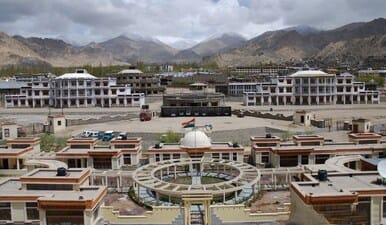
LEH: The Ladakh administration will set up an Autonomous Hill Development Council in each of the Union Territory’s seven districts, Chief Secretary Ashish Kundra announced at a press conference here on Monday.

Kundra described the decision as a major step toward democratic decentralisation and grassroots governance.
Under Section 3(1) of the LAHDC Act, a Council can be constituted for every district from a date notified by the government in the gazette. The administration said only the required amendments to the Act and delimitation of constituencies are pending.
The UT was reorganised in April 2026, when Sham, Nubra, Changthang, Zanskar and Drass were notified as new districts, taking Ladakh’s total to seven. Until now, elected representation has been limited to the existing Hill Councils in Leh, set up in 1995, and Kargil, set up in 2003.
Key announcements
1. Councils in all 7 districts
A Ladakh Autonomous Hill Development Council will be constituted in each district. The Chief Secretary said this will take governance closer to the people.
2. Full powers, not diluted
Each of the seven Councils will have the full powers laid out in the LAHDC Act. The new districts will have the same authority that Leh and Kargil have held, not a reduced version.
3. Control over land
Hill Councils will have authority over land ownership and allotment within their district. Sham, Nubra, Changthang, Zanskar and Drass will now exercise these powers within their own boundaries.
4. District-level recruitment
Councils will regulate recruitment and promotions for district cadre posts. Employment decisions in the new districts will be made by an elected body at the district level.
5. Own funds and revenue
Each Council will have a dedicated Council Fund and the power to levy taxes and fees, giving every new district its own revenue base.
6. Local development plans
Councils will formulate their own development plans. Each district will set its own priorities instead of receiving them from Leh or Kargil.
7. Social sectors and infrastructure
Councils will be responsible for health, education, tourism, local infrastructure and social welfare schemes at the district level.
8. Proposed UT-level body under Article 371
A Union Territory-level body is proposed above the seven Councils under a customised Article 371 framework. It would have legislative, executive, financial and administrative powers. Kundra said the model has no parallel in the country and will draw on the best features of existing arrangements.
9. Structure to be decided in consultation
The structure and powers of the UT-level body will be finalised after consultations between Ladakh’s representatives and the Government of India. Some rebalancing of powers between the Councils and the UT body may follow. For now, the seven Councils are the first confirmed element of the new structure.
10. Panchayati Raj to continue
Panchayati Raj institutions will continue to function alongside the Hill Councils. Ladakh will have elected representation at the village, district and UT levels.