More Surrenders, Fewer Attacks: Arunachal’s Gradual Peace

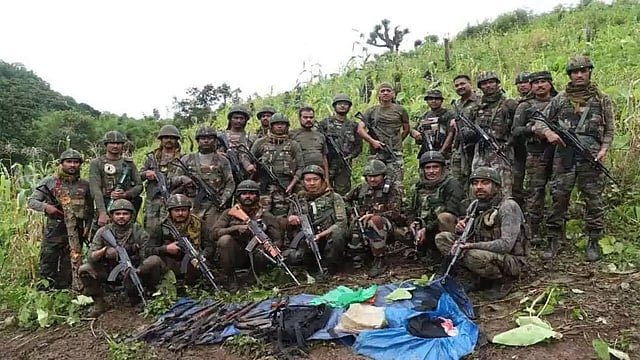
File Pic ( Source:The Sentinel)
(Afsara Shaheen)
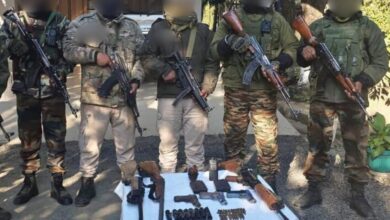
On August 7, 2026, four cadres of United Liberation Front of Asom-Independent (ULFA-I) surrendered before the 44 Assam Rifles and Longding Police at Wakka in Longding District, Arunachal Pradesh. The surrendered cadres were identified as ‘lance corporal’ (LC) Ajay Asom (33), LC Biplob Asom (31), LC Monei Asom (28), and Bolin Asom (22). Four pistols and 17 live rounds of ammunition were recovered during the surrender. The surrender is the latest in a series of such incidents reported across the Tirap-Changlang-Longding (TCL) region in 2026 and points to increasing pressure on insurgent groups operating in the State


The August 7 development followed several surrenders involving cadres of different militant formations. On July 17, 2026, a cadre of the National Socialist Council of Nagaland-Reformation (NSCN-R), identified as self-styled ‘lieutenant colonel’ Penngam Konyak (42), surrendered before Security Forces (SFs) at the Superintendent of Police’s office in Khonsa, Tirap District, laying down a pistol and live cartridges.
On July 11, 2026, an active cadre of the Ang Mai-led National Socialist Council of Nagaland-Khaplang (NSCN-K), Pongngoi Wangnowham (37), surrendered before the Arunachal Pradesh Police, 24 Assam Rifles and the Intelligence Unit in Longding District. Wangnowham had reportedly been associated with the outfit since 2005.
Earlier, on June 29, 2026, two cadres of the National Socialist Council of Nagaland-Khaplang-Nikki Sumi (NSCN-K-NS) surrendered before Assam Rifles and Arunachal Pradesh Police during an operation in the Kheti area of Tirap District. On June 23, three cadres belonging to NSCN-R and the National Socialist Council of Nagalim-Isak-Muivah (NSCN-IM) surrendered before Changlang District Police.
On May 20, 2026, an NSCN-IM cadre surrendered before Assam Rifles in the Khonsa area of Tirap District, following sustained intelligence-based operations and outreach efforts by SFs.
According to partial data compiled by the South Asia Terrorism Portal (SATP), 23 militants have surrendered in 16 separate incidents in Arunachal Pradesh in 2026 (data till August 16, 2026). This is substantially higher than the total of 12 militants who surrendered in eight incidents through 2025, and four militants in three incidents in 2024. Since 2000, 249 militants have surrendered in 95 separate incidents in the State. The sharp increase in surrenders in 2026, involving cadres from ULFA-I, NSCN-R, NSCN-IM and different NSCN-K factions, suggests that sustained counter-insurgency operations and outreach measures are exerting pressure on insurgent networks.
The surrender trend is particularly significant in the TCL region, which remains the principal theatre of insurgent activity in Arunachal Pradesh. Tirap, Changlang and Longding are strategically located along the India-Myanmar border and provide a corridor for militant organisations operating across the Northeast. The proximity of militant camps in Myanmar’s Sagaing Region has historically enabled insurgents to cross the international boundary and evade SF operations. Since 2000, approximately 77 percent of the State’s insurgency-related fatalities have been recorded in these three districts, underlining their continuing importance to the security environment.
At the same time, the overall intensity of insurgent violence in Arunachal Pradesh remains considerably lower than during earlier phases of militancy. In 2026, however, militant groups have demonstrated that they retain the capacity to conduct attacks, particularly against SF camps and personnel operating close to the international border.
On August 14, 2026, NSCN-K-YA opened fire on an Assam Rifles camp at Longvi under the Nampong Police Station in Changlang District. Assam Rifles personnel retaliated, forcing the attackers to flee into a nearby jungle. No casualties were reported, while SFs subsequently launched a search operation and intensified surveillance in the area. According to a statement issued by the outfit, the attack was carried out against what it described as the “domination” of the Naga people and reiterated its demand for Naga sovereignty.
The August 14, incident came months after a more serious attack on March 26, 2026, when three Assam Rifles personnel were killed in an attack by NSCN-K-YA militants along the Namgoi-Pangsau Road near the India-Myanmar border in Changlang District. The militants targeted a construction team of the 10th Assam Rifles that was engaged in building a border fence. NSCN-K-YA subsequently claimed responsibility, linking the attack to opposition to border fencing. The incident demonstrated the sensitivity of infrastructure development in insurgency-affected border areas and the ability of militant groups to exploit local opposition to security and connectivity projects.
Earlier, on January 26, 2026, suspected NSCN-K-YA militants had attacked an Assam Rifles camp near Changlang District Headquarters. The militants reportedly opened fire from two directions before Assam Rifles personnel retaliated and SFs launched search and cordon operations. No casualties were reported. These incidents indicate that, although insurgent violence remains geographically restricted, militant formations continue to retain operational capabilities in the border belt.
The State has nevertheless recorded operational successes. In 2025, SFs killed ULFA-I cadre Iwan Axom alias Konti Axom alias Abhikeshwar Moran in an encounter in Namsai District and recovered an HK rifle, a hand grenade and other materials. An NSCN-K-YA cadre was also killed in an encounter with Assam Rifles near the India-Myanmar border in Longding District in July 2025, following which arms, ammunition and military-grade supplies were recovered from a temporary insurgent hideout.
Similarly, 16 militants have been arrested in nine separate incidents in Arunachal Pradesh in 2026, compared with 25 militants arrested in 14 incidents through 2025 and 23 militants in 11 incidents in 2024 (data till August 16, 2026). Since 2000, a total of 789 militants were arrested in 444 separate incidents in the State. The arrests, alongside encounters and surrenders, indicate sustained pressure on militant networks and continued efforts by SFs and State Police to disrupt their operational infrastructure.
Alongside kinetic operations, the rehabilitation of surrendered cadres has emerged as an important component of the State’s counter-insurgency strategy. The Arunachal Pradesh State Home Department informed the Legislative Assembly on March 9, 2026, that 165 underground operatives belonging to various militant formations had surrendered in Tirap, Changlang and Longding during the preceding five years. Of these, 77 surrendered in Longding, 47 in Tirap and 41 in Changlang. Most of the surrendered operatives are being accommodated at a rehabilitation camp at Bhismaknagar, while they receive vocational training at the Industrial Training Institute in Roing.
The rehabilitation process could have a broader impact on the insurgency by reducing the pool of available cadres and providing former militants with alternatives to continued underground activity. The growing number of surrenders in 2026, particularly from different factions, indicates that militant organisations may be experiencing difficulties in retaining cadres in the face of sustained SF operations and increased opportunities for reintegration.
Despite these positive indicators, extortion remains a significant challenge. In May, NSCN-K-YA reportedly revived its extortion network in Changlang District, targeting vehicle owners, businessmen and operators of heavy machinery through written notices. Poclain (JCB machine) owners were reportedly asked to pay INR 50,000 annually, while truck owners were asked to pay INR 25,000. Such demands provide insurgent organisations with an important source of financial sustenance even when their ability to conduct large-scale attacks is limited.
Extortion has also targeted government institutions. On February 10, 2026, NSCN-K-YA reportedly issued an extortion demand to the Public Works Department in Longding, seeking 20 per cent “service and income tax” for 2026 and threatening consequences in case of non-payment. Such demands demonstrate that militant groups continue to seek to maintain influence over the local economy and development activities.
The cross-border dimension remains the principal structural challenge. TCL districts are situated close to areas of Myanmar where militant camps have historically provided safe havens to insurgent groups. The difficult terrain, porous international boundary, and widespread strife in Myanmar, enable militants to move between India and Myanmar, complicating counter-insurgency operations. Moreover, insurgency in the region remains linked to the broader Naga nationalist movement and competing
NSCN factions, whose political and territorial objectives extend across parts of Arunachal Pradesh, Nagaland, Manipur, Assam and Myanmar.
The security environment is therefore best characterised as one of declining insurgent violence but continuing low-intensity militant activity. The State is not witnessing the level of violence associated with earlier phases of insurgency, but isolated attacks, extortion, cross-border movement and the presence of armed cadres remain important security concerns. The concentration of these activities in the TCL region also means that improvements in the wider State can coexist with persistent vulnerabilities in specific border pockets.
The growing surrender figures provide the strongest evidence of an improving security environment. The increase from in surrenders, combined with arrests, encounters and the disruption of militant networks, suggests that insurgent groups are under sustained pressure. The fact that the recent surrenders involve cadres from multiple organisations is particularly significant, as it indicates that the trend is not limited to the weakening of a single faction.
At the same time, the August 14 attack demonstrates why these gains cannot yet be considered irreversible. Continued vigilance along the India-Myanmar border, intelligence-based operations and coordination between Assam Rifles, State Police and other security agencies will remain necessary. Greater attention is also required to disrupting extortion networks and preventing militant groups from exploiting infrastructure projects and local grievances.
Arunachal Pradesh’s security situation reflects a gradual but discernible improvement, particularly when measured against the scale and intensity of insurgency witnessed in earlier periods. The continued presence of armed groups in the TCL region, sporadic attacks on SFs, extortion and cross-border safe havens demonstrate that the insurgency has, however, not been eliminated. Consolidating the recent gains will require sustained security operations, effective border management, disruption of militant financing and continued rehabilitation of surrendered cadres. The challenge for the State is therefore to convert the present decline in insurgent violence into durable peace and stability across its vulnerable border districts.
Author Afsara Shaheen is Senior Fellow at Institute for Conflict Management.
(The views expressed in the above piece are personal and of the author. They do not necessarily reflect Bharat Fact views.)