Modi hosts Nepal PM Shah, unveils 24,000 crore Nepali rupees aid for flood-hit Nepal

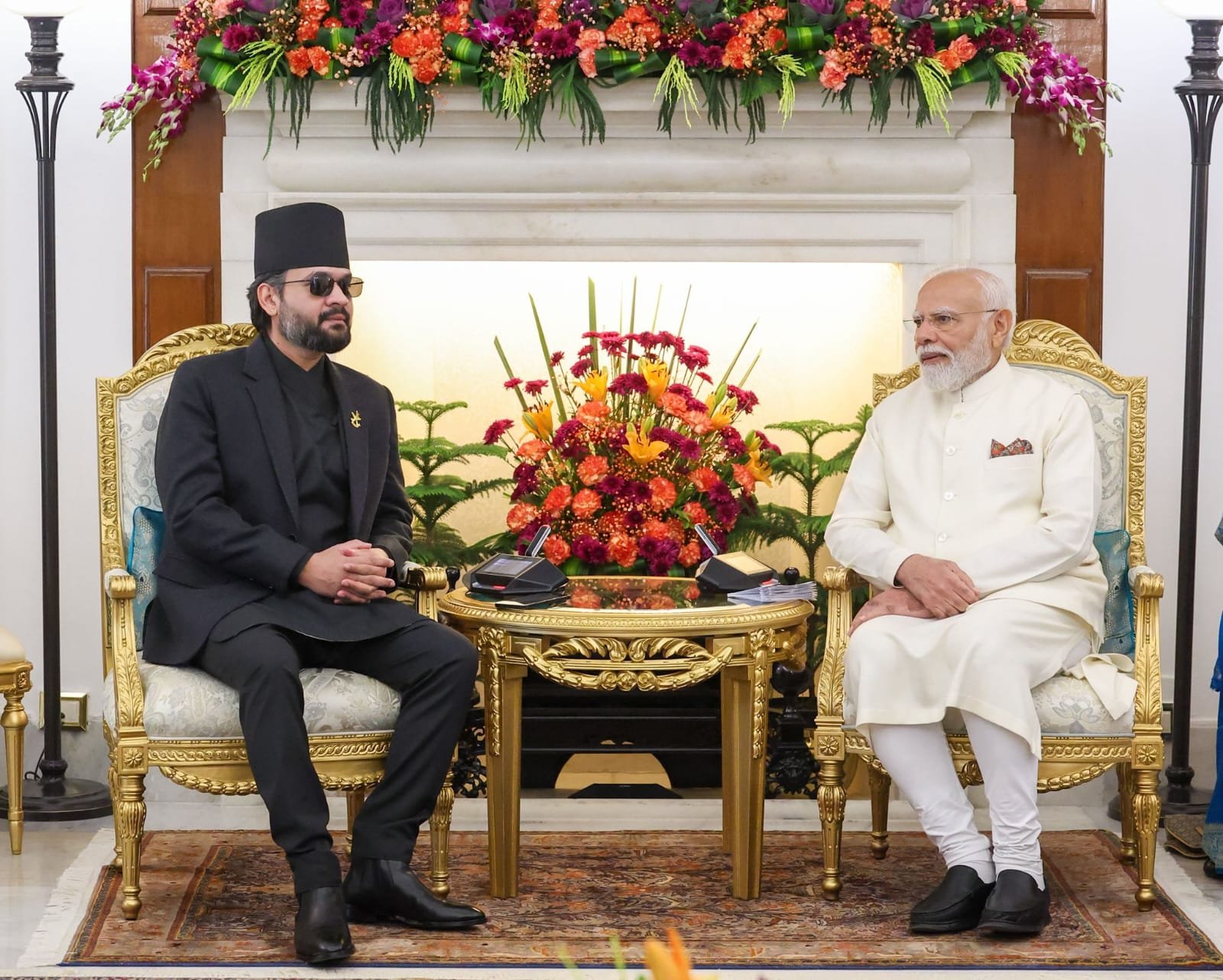
NEW DELHI: India on Monday announced a Development Cooperation Package of 24,000 crore Nepali rupees – about 15,000 crore Indian rupees – for Nepal’s reconstruction and long-term development after devastating floods in August, as Prime Minister Narendra Modi hosted Nepal’s Prime Minister Balendra Shah in New Delhi.
Speaking at a joint press statement at Hyderabad House after delegation-level talks, Modi expressed condolences for the loss of life in the floods and said the package would help affected families rebuild and strengthen Nepal’s capacity to deal with future disasters.
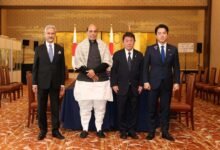
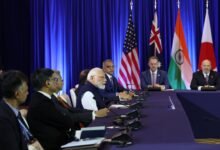
“We express our deep condolences for the loss of lives caused by the severe floods in Nepal in August,” Modi said. “Today, to provide new strength to Nepal’s reconstruction and long-term development, we announce a Development Cooperation Package of 24,000 crore Nepali rupees.”
“Our resolve will be that the lives of the affected families get back on track, new opportunities are created, and Nepal’s capacity to deal with future disasters is also further strengthened,” he added.
The visit is Shah’s first bilateral visit abroad since taking office, and his first to India as prime minister. Modi welcomed him as the world’s youngest prime minister, noting his address to the United Nations a few months ago.
“A few months ago, when he addressed the UN as the world’s youngest Prime Minister, we saw a clear glimpse of his vision,” Modi said.
The two leaders jointly flagged off the Saryu-Kamala Express, a new weekly train service between Ayodhya Cantt in Uttar Pradesh and Janakpur Dham in Nepal, linking the birthplace of Lord Ram with the birthplace of Goddess Sita.
“Lord Ram and Mata Sita are symbols of our shared civilisation and faith,” Modi said. “Lord Ram in India is incomplete without Nepal.”
The leaders also inaugurated and laid foundation stones for six major projects, including the Dharchula road bridge, an Integrated Check Post at Banbasa, the Lower Arun Hydroelectric Project, and Phase Two of the Motihari-Amlekhganj petroleum pipeline.
Modi said India had continued to supply fuel, fertilisers and other essentials to Nepal this year despite serious challenges in global oil supply, in line with its Neighbourhood First policy.
The two sides released a Joint Vision Document described as a blueprint for “Viksit Bharat and Samunnat Nepal” – a developed India and a prosperous Nepal.
India and Nepal signed eight Memorandums of Understanding spanning space technology, security training, civil service capacity building, health, traditional medicine, sustainable urban development, and agriculture.
The agreements include cooperation between ISRO and Nepal’s Ministry of Information and Communication on the South Asia Satellite network, partnerships involving India’s National Forensic Sciences University and Rashtriya Raksha University, and training programmes for Nepalese civil servants.
Modi also announced an offshore campus of an Indian Institute of Technology in Nepal and expanded scholarship opportunities for Nepali students in law, technology and other fields.
Shah thanked Modi for the invitation and hospitality, describing mutual respect, trust and goodwill as the foundation of relations.
“Mutual respect, trust and unbroken goodwill are the bedrock of Nepal-India relations. At the heart of this incomparable bond are the peoples of our two countries,” Shah said.
“May the friendship between Nepal and India be one where trust stands as tall as the Himalayas, cooperation flows unbroken like a river, and the prosperity of both nations blossoms under our shared sky,” he added.
He acknowledged India’s support during natural disasters, describing it as a dependable neighbour that had consistently acted as a first responder.